


Why Shoulder Pain Is Rarely Just a Shoulder Problem
How rib cage organization and breath shape shoulder function
Shoulder pain is one of the most common reasons people seek out Pilates. It can show up as stiffness, pinching, weakness, or a vague sense that the shoulder doesn’t feel trustworthy.
What often surprises clients is that I don’t immediately focus on the shoulder itself. Instead, I watch how the rib cage moves, how the spine organizes, and how the shoulder blade relates to the torso.
This isn’t because the shoulder is unimportant. It’s because shoulder function depends on what it’s moving on top of.

The Shoulder Needs a Stable, Responsive Base
The shoulder joint is designed for mobility. Because of that, it relies heavily on surrounding structures for support and orientation.
One of the most important of those structures is the rib cage.
The shoulder blades rest on the rib cage. They glide, rotate, and stabilize in response to arm movement. When the rib cage is well organized, the shoulder blades can move with clarity. When rib cage alignment or mobility is compromised, the shoulders often compensate.
That compensation can look like gripping, limited range of motion, or irritation within the joint itself.
How Rib Cage Organization Affects the Shoulders
When the rib cage is stacked over the pelvis, the spine can support arm movement efficiently. The shoulder blades have a stable surface to move on, and the muscles around the shoulder can share load more evenly.
When the rib cage is habitually flared, collapsed, or rigid, that support disappears. The neck and upper trapezius muscles often take over. The arms feel heavy.
Movement becomes effortful.
In these cases, shoulder pain is rarely caused by weakness alone. It’s often the result of poor organization beneath the joint.
Why Local Shoulder Strengthening Isn’t Always Enough
Many people try to resolve shoulder pain by strengthening the shoulder muscles directly. While strength is important, it doesn’t always solve the problem.
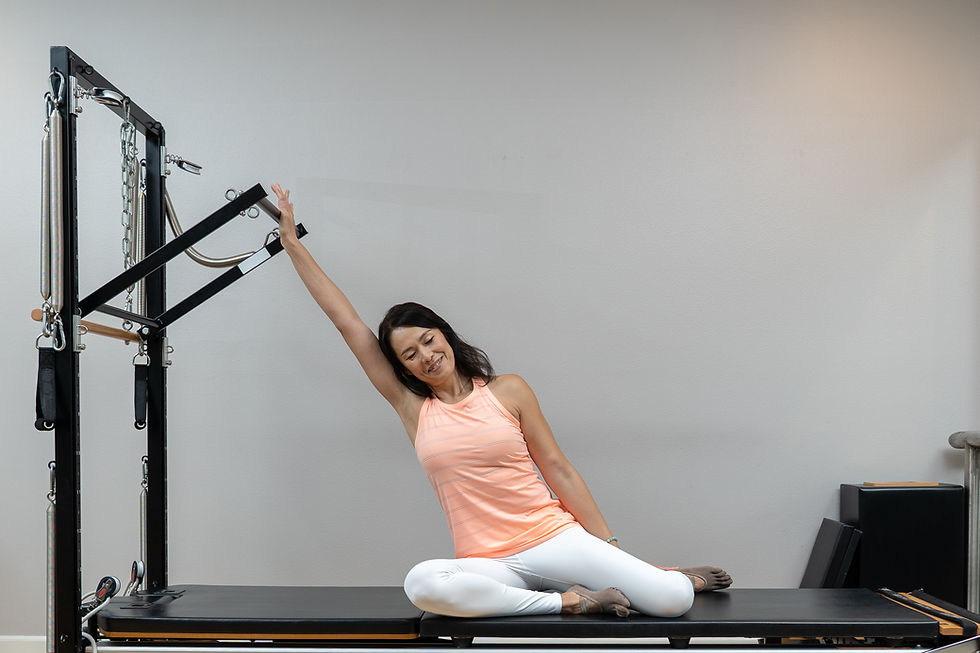
If the rib cage doesn’t move well with breath, or if it isn’t aligned relative to the pelvis, the shoulder has to work harder just to stabilize itself. Strengthening on top of that foundation often reinforces compensation rather than reducing it.
In my work, I’m always asking whether the shoulder is being asked to do too much because something underneath it isn’t contributing.
Breath, Rib Movement, and Shoulder Function
Breathing plays a significant role in shoulder mechanics.
The rib cage needs to expand and respond with breath to support arm movement.
When breathing is restricted, shoulder motion often becomes limited or tense.
This is why shoulder work in Pilates is rarely isolated. It’s paired with breath cues and rib awareness to help redistribute effort throughout the system.
Often, once the rib cage begins to move more freely, shoulder symptoms soften without directly targeting the joint.
How I Approach Shoulder Pain in Pilates
I don’t treat shoulder pain as something to fix. I treat it as information.

I observe how the ribs move during arm work. I notice how the shoulder blades respond to load. I watch for breath holding, neck tension, or rib rigidity.
Small changes in rib position, pacing, or resistance often create immediate changes in how the shoulder feels. This isn’t accidental. It reflects better organization of the system as a whole.
What Happens When the Rib Cage Is Ignored
When rib cage organization is consistently overlooked, shoulder pain often becomes chronic.
The joint may feel unstable or irritated. The neck tightens. Upper back tension increases. Exercises meant to strengthen the shoulders feel exhausting rather than supportive.
The body is compensating for a missing link.
Reintroducing rib cage awareness often restores movement options the shoulder has been missing.
Shoulder Health Beyond Exercise
Healthy shoulders depend on more than isolated strength.
They rely on how the spine supports movement, how the rib cage responds to breath, and how load is distributed through the body.
When these relationships improve, arm movement feels lighter. The shoulders feel less reactive. Confidence returns.

Final Thought: Support the Structure Beneath the Joint
The shoulder doesn’t move in isolation.
When the rib cage provides a stable yet responsive base, the shoulder can move with freedom rather than force. Pain often decreases not because the shoulder is worked harder, but because it’s finally supported.
This is why I look beyond the joint itself. The answer is often underneath it.

Lauren Dalke is a STOTT-certified Pilates instructor with over 15 years of experience, specializing in private sessions that integrate biomechanics, functional strength training, and nervous system–informed movement. She is the founder of LDV Pilates in Mar Vista, CA.


Comments