


The Way You Breathe Changes EVERYTHING
Breathing, the Rib Cage, and Core Support
Watching Breath Is Part of How I Teach
One of the first things I notice when someone starts moving is not how strong they are, or how flexible they look, but how they breathe. Breath tells a story. It reveals where someone feels supported, where they are bracing, and where their body may not feel entirely safe letting go.
But breathing is not an add-on, it is an integral part of how the body organizes itself, how the bones align, and how the muscles function. The way we breath also affects the intra-abdominal pressure. In Pilates, breath is one of the clearest windows into alignment, core support, and nervous system state.

What Breathing Has to Do With Alignment
Breathing is not just something the lungs do. It is a full-body event.
The diaphragm, rib cage, spine, abdominal wall, and pelvic floor all participate in breathing. The way the ribs move with each breath affects how the spine stacks, how the pelvis organizes, and how the shoulders and neck respond.
When breath is restricted, forced, or held, the body often compensates by creating tension elsewhere. When breath is responsive and well-distributed, the body tends to organize itself with less effort.
This is why I pay close attention to rib cage movement. The ribs are a central organizing structure that influence both alignment and support.
The Rib Cage as the Missing Link
The rib cage sits between the pelvis and the head. It connects breath to movement and links the upper and lower body.

When the rib cage is stacked over the pelvis, the diaphragm can move efficiently. The abdominals can support the spine without gripping, and the shoulder girdle can move without excessive tension. Breath supports movement rather than competing with it.
When the rib cage is habitually flared, collapsed, or rigid, several things tend to happen. Core engagement becomes superficial. The neck and shoulders take on more work. The nervous system often stays in a low-level state of vigilance.
Many people try to fix this by working harder or bracing more. But more effort rarely restores natural rib movement. Awareness and organization do.
Core Support Is Not the Same as Bracing
One of the biggest misconceptions I see is that core strength comes from pulling the abdominals in or holding the breath.
True core support is dynamic. It adapts as the body moves and breathes. The abdominals, diaphragm, pelvic floor, and deep spinal muscles work together to create support that is responsive rather than rigid.
When breathing and rib movement are restricted, the core often defaults to bracing. Bracing may feel strong, but it limits mobility and increases fatigue. Over time, it can contribute to back pain, neck tension, and a sense that movement always feels effortful.
In Pilates, we aim for support without stiffness. That begins with breath.
A Nervous System Perspective
Breathing patterns are closely tied to the nervous system. Shallow, held, or forced breathing often reflects a body that is operating in a state of stress, even if the person does not feel anxious.

When breath is allowed to move freely through the rib cage, the nervous system receives signals of safety. This can change muscle tone, coordination, and even pain perception.
This idea is echoed in Chinese medicine, where breath and movement are seen as expressions of how well the body adapts to its environment. Ease and responsiveness are signs of balance. Rigidity is often a sign of strain.
Teaching breath is not about control. It is about restoring options.
How I Teach Breath in Pilates
I do not teach breathing as a separate technique. I teach it through movement.
I watch how ribs respond during simple exercises. I notice whether breath supports motion or interrupts it. I cue small changes in rib position, pace, or load to help the body rediscover a more natural breathing pattern.
Even though breathing patters and technique are so important to Pilates effectiveness, if adjusting breathing with movement doesn't come naturally to my client, then we work our way in slowly. Because our breath is so closely intertwined with the nervous system, the last thing I want to do is cause stress around the breath - because this will make it even harder to connect. Sometimes we focus on moving, downregulating the nervous system, and getting more comfortable with this way being, and then sometimes the breath magically aligns.
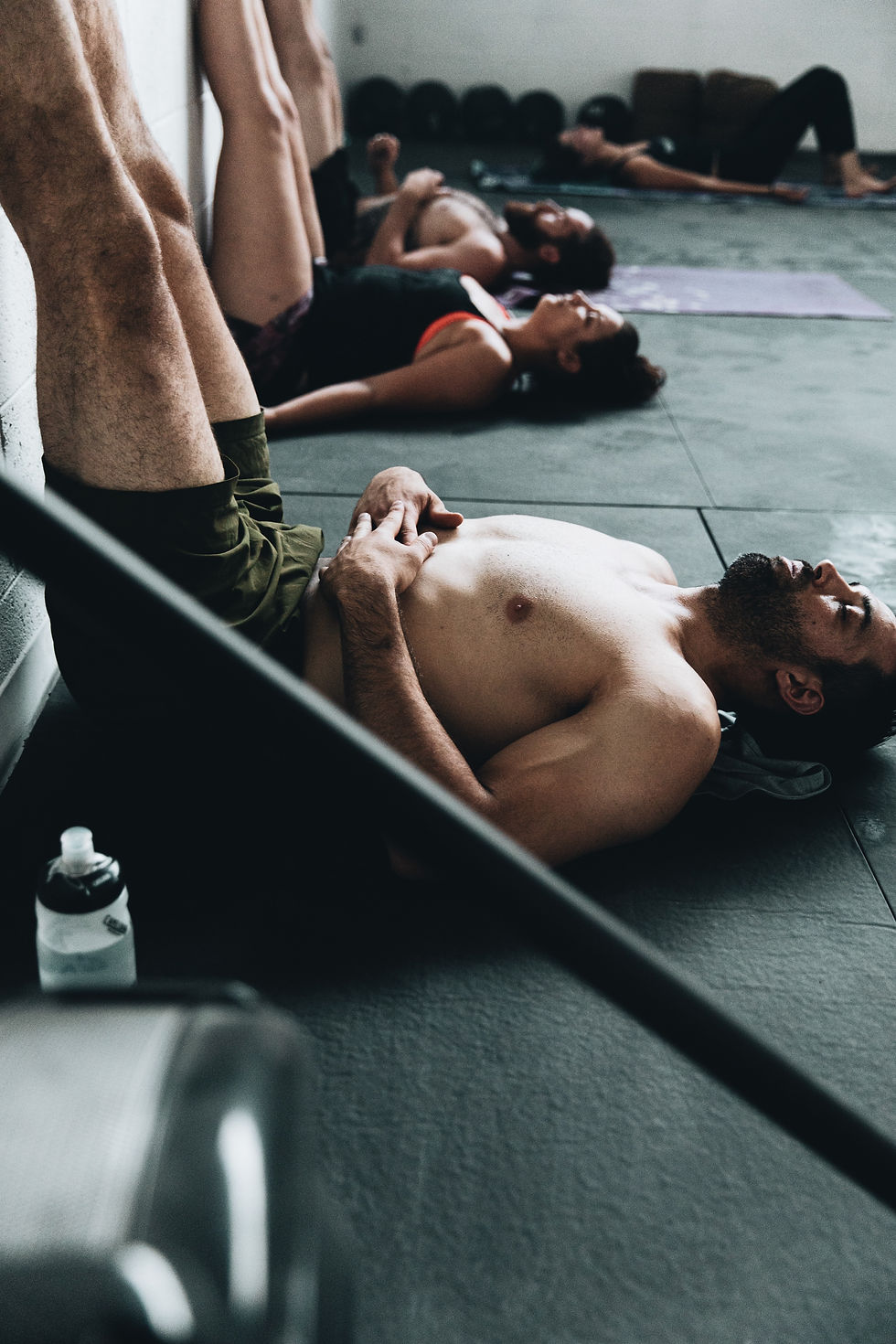
Often, when rib cage alignment improves, clients feel stronger without doing more work. Exercises that once felt exhausting begin to feel supportive. This is not accidental. It is the result of better organization.
What Happens When Breath and Rib Alignment Are Ignored
When breathing and rib cage alignment are consistently overlooked, the body adapts in predictable ways.
Neck and shoulder tension increases. Core work feels harder but less effective. Low back discomfort becomes common. Fatigue shows up more quickly.
The body is still functioning, but it is doing so with more effort than necessary.
Breathing well does not mean breathing deeply all the time. It means breathing appropriately for the task at hand, with the ribs and spine able to respond as needed.
Breathing Beyond the Studio
The way someone breathes during movement often mirrors how they respond to stress in daily life.
When the body learns to support movement without bracing, that pattern tends to carry over. Breathing becomes less forced. Movement feels less urgent. Effort is distributed more evenly.
This is one of the quieter benefits of Pilates. It teaches the body how to respond rather than react.

Final Thoughts: The way you breath changes everything
Breath is not just about oxygen. It is about organization.
When breathing, rib alignment, and core support work together, movement becomes more efficient and less exhausting. Strength feels accessible rather than forced.
This is why I pay such close attention to breath. Not because it needs to be perfected, but because it reveals how the body is working as a whole.
The way you breathe changes everything.

Lauren Dalke is a STOTT-certified Pilates instructor with over 15 years of experience, specializing in private sessions that integrate biomechanics, functional strength training, and nervous system informed movement. She is the founder of LDV Pilates in Mar Vista, CA.


Comments